
Key Takeaways
- Selecting the best nailer for woodworking significantly impacts project quality and efficiency.
- Identify your project type to choose between framing, finish, or upholstery nailers tailored to specific tasks.
- Consider whether to use a pneumatic or cordless nailer based on your project needs and mobility preferences.
- Proper nail size, ergonomics, and depth adjustment are crucial for achieving precise results in woodworking.
- Avoid common mistakes like using incorrect nail sizes, neglecting safety, and overloading your nailer to ensure optimal performance.
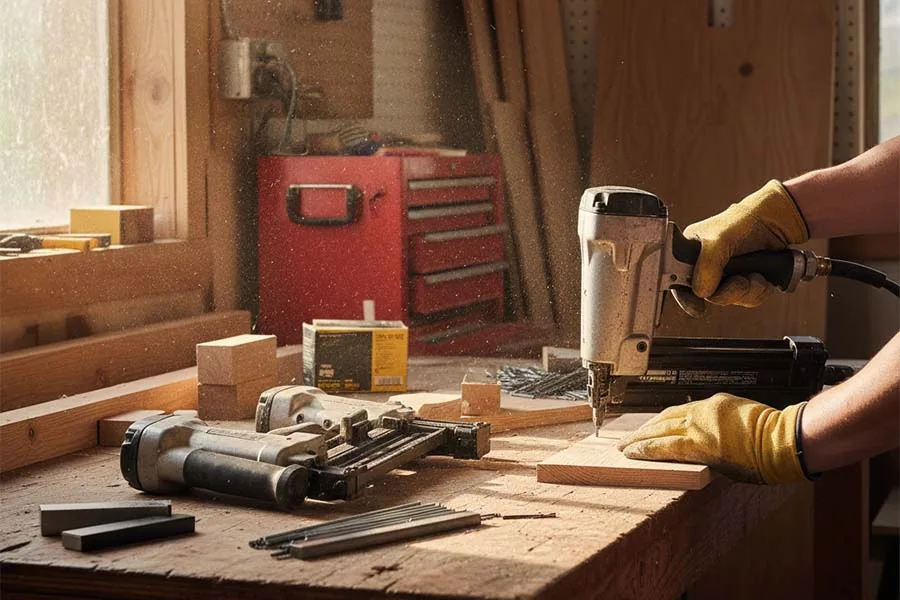
When it comes to woodworking or framing, choosing the right nailer can make all the difference between a smooth, professional finish and a frustrating, subpar result. Whether you’re a DIY enthusiast or a seasoned professional, understanding how to pick the best nailer is crucial for the efficiency, safety, and quality of your projects.
A nailer isn’t just a tool – it’s an investment in the quality of your craftsmanship. But with so many options on the market, how do you know which one suits your needs? In this guide, we’ll walk you through the process of selecting the best nailer for your woodworking or framing projects, offering step-by-step guidance, tips, and safety advice.
Why Picking the Right Nailer Matters
Choosing the right nailer can drastically improve your speed and accuracy, reducing mistakes and saving you time on your projects. Plus, using a nailer tailored to your task ensures stronger joints and cleaner results, especially when working with different types of wood or materials.
But it’s not just about choosing a tool; it’s about mastering it to get the best outcome. Let’s dive into how you can pick the best nailer for your woodworking or framing projects.
Step-by-Step Guide to Choosing the Best Nailer
1. Identify Your Project Type
The first step is to clearly define your project. Are you framing a house, assembling furniture, or doing finish work? The type of work you’re doing plays a significant role in determining the right nailer.
- Framing Projects: If you’re working on larger projects like building a deck or framing a house, you’ll need a framing nailer. These are designed for heavy-duty tasks and can drive large nails (typically 3-1/2 inches or longer).
- Woodworking or Finish Work: For smaller, detailed tasks like installing trim or building cabinets, a finish nailer or brad nailer is more suitable. These nailers drive smaller nails (usually 1-2 inches) to avoid splitting delicate wood.
- Upholstery or Trim Work: A pneumatic pin nailer is a great choice for very fine nails used in trim work or upholstery projects.
2. Decide on Nailer Type: Pneumatic vs. Cordless
Nailer models generally come in two types: pneumatic (air-powered) and cordless (battery-powered). Here’s a breakdown to help you decide:
- Pneumatic Nailers: These tools require an air compressor, making them more powerful and ideal for professional use. They’re more common in framing and heavy-duty projects.
- Cordless Nailers: These run on rechargeable batteries and are more portable and convenient, making them suitable for DIY projects and light framing or finishing tasks.
3. Consider Nail Size and Type
Nailers come in various sizes, with nails ranging from 18-gauge brads to 16d framing nails. When selecting a nailer, always check the specifications for the size and type of nails it uses. Common nail types include:
- Brad Nails: Thin, small nails for trim or delicate work.
- Finish Nails: Slightly thicker nails for heavier finish work.
- Framing Nails: Large, heavy-duty nails for structural work.
- Coil vs. Stick Nails: Framing nailers can use either coil nails (which hold more nails and are easier to reload) or stick nails (which come in straight rows).
4. Look at Ergonomics and Weight
A comfortable nailer is essential, especially if you’re using it for long hours. Look for a nailer that fits comfortably in your hand and isn’t too heavy. Many modern tools feature anti-vibration handles and ergonomic grips, which reduce strain on your hands and wrists.
5. Evaluate Power and Depth Adjustment
Some projects require precise control over how deep the nails go. A good nailer will feature a depth adjustment knob, allowing you to set the driving depth based on the material you’re working with.
- For example, when working with softwoods, you might want a shallower depth to avoid splitting the wood.
- Power: Pneumatic nailers often offer more consistent power than cordless models, but recent advancements in battery technology have made some cordless options very competitive.
6. Choose Between a Single or Sequential Firing Mechanism
Nailer firing mechanisms come in two types:
- Single Shot: You press the nose against the material to fire a nail.
- Sequential: You press the trigger to fire, making it safer but slower, as each nail is fired one at a time.
The firing mechanism you choose depends on your project speed and safety preferences.
Common Mistakes and How to Avoid Them
1. Using the Wrong Nail Size
Using nails that are too long or short can compromise the integrity of your work. Always check the specifications of your project and select nails that fit the material thickness.
2. Overloading the Nailer
Some nailers have specific nail capacities, and exceeding this can cause jams or even damage the tool. Always follow manufacturer guidelines for loading nails.
3. Forgetting Safety Measures
Always wear eye protection and ear protection when operating a nailer. Pneumatic models, in particular, are loud and can cause hearing damage.
Troubleshooting: What to Do If Things Go Wrong
- Nailer Jams
If your nailer jams, turn off the air supply (for pneumatic models) or disconnect the battery (for cordless models). Clear the jam by removing the nail and inspecting the tool for any obstructions. Regular cleaning of the tool helps prevent jams. - Nail Depth Is Too Shallow or Too Deep
Adjust the depth setting on the tool to match your material. If the nail still doesn’t sit right, consider using a different nail length. - Weak Nail Driving
If the nails aren’t driving fully into the material, check the air pressure (for pneumatic nailers) or the battery charge (for cordless models). If you’re using a pneumatic tool, low air pressure is often the culprit.
Best Practices & Safety Warnings
- Always Wear Safety Gear
Protect your eyes, ears, and hands. Even with modern safety features, nailers are powerful tools that can cause injury if mishandled. - Check the Nailer Before Each Use
Inspect the tool for any loose parts, damage, or wear. Replace any worn-out parts immediately. - Avoid Pointing the Nailer at Yourself or Others
Nail guns are powerful and can fire without warning. Always keep the tool pointed away from yourself and others, especially when loading nails.
Interesting and Lesser-Known Facts
Interesting Fact:
Did you know that pneumatic nailers can actually drive more nails per minute than their battery-powered counterparts? That’s why they’re the go-to tool for professionals who need efficiency on large framing projects.
Lesser-Known Fact:
The first modern pneumatic nail gun was invented in 1958 by T.R. (“Ted”) Bencini, and it revolutionized the construction industry by drastically increasing the speed and accuracy of framing work.
Further Read
Conclusion: Time to Choose the Right Nailer!
Choosing the right nailer for woodworking or framing projects is a step that can make or break the efficiency and quality of your work. By understanding your project needs, the types of nailers available, and how to maintain them, you can make an informed decision that leads to better results and less frustration.
Now that you know the essentials, we encourage you to pick the right nailer for your next project and experience the benefits of faster, cleaner, and stronger results. Don’t forget to share your experiences in the comments section below – let us know which nailer worked best for you or if you have any other tips to share!
If you found this guide helpful, share it with your friends and colleagues—after all, everyone deserves to have the best tools for the job.