
A complete guide for DIY users, technicians, and industrial professionals
Heat guns are simple but powerful tools used across workshops, construction sites, automotive repair, electronics, and industrial maintenance. When a heat gun suddenly stops heating, it can interrupt your workflow – but in most cases, the cause is easy to diagnose and fix.
This guide walks you through what to check, why it happens, how to fix it, and when it’s time to replace the tool. Whether you’re a professional technician or a home user, this step‑by‑step troubleshooting process will help you restore performance safely and efficiently.
Safety First: Before You Start
Heat guns operate at extremely high temperatures. Before opening, inspecting, or testing anything:
- Unplug the heat gun completely
- Allow it to cool for at least 10 minutes
- Do not open the casing if the tool is under warranty
- Avoid touching internal components unless you are qualified
- Wear gloves and safety glasses
If the heat gun shows signs of burning smell, smoke, or melted plastic, stop immediately – this indicates a serious internal failure.
Why Heat Guns Stop Heating: The 6 Most Common Causes
Heat guns rely on a simple system: airflow + heating element + power. When one of these fails, the tool stops producing heat.
Here are the most common reasons:
1. Blocked Airflow (Dust, Debris, Paint, Plastic)
If air can’t flow through the tool, the heating element overheats and shuts down.
Symptoms:
- Weak airflow
- Heat gun gets hot but doesn’t blow hot air
- Automatic thermal cutoff triggers
2. Faulty Power Source
Loose connections, damaged cables, or weak extension cords can interrupt power.
Symptoms:
- Heat gun turns on/off randomly
- Fan works but no heat
- Sparks or flickering power
3. Failed Heating Element
The coil inside the heat gun can burn out over time.
Symptoms:
- Fan works normally
- No heat at all
- Visible break in the coil (if inspected)
4. Burned Thermal Fuse or Thermal Cutoff
Heat guns have safety fuses that shut down the tool if it overheats.
Symptoms:
- Heat gun turns on but stays cold
- No visible damage
- Happens after long use or blocked airflow
5. Faulty Switch or Temperature Selector
The switch may fail internally, preventing the heating element from activating.
Symptoms:
- Only one temperature setting works
- Heat cuts out when switching modes
6. Internal Wiring Damage
Wires can loosen, melt, or disconnect due to vibration or heat.
Symptoms:
- Intermittent heating
- Burning smell
- Tool works only when held at certain angles
Step‑by‑Step Troubleshooting Guide
Step 1 – Check the Airflow
Blocked vents are the #1 cause of heat gun failure.
- Inspect the front and rear vents
- Remove dust, debris, paint flakes, or melted plastic
- Use compressed air to clean the intake
If airflow improves but heat does not return, continue to Step 2.
Step 2 – Test the Power Source
- Try a different outlet
- Avoid long or thin extension cords
- Inspect the cable for cuts, bends, or exposed wires
If the fan runs but the heating element doesn’t, move to Step 3.
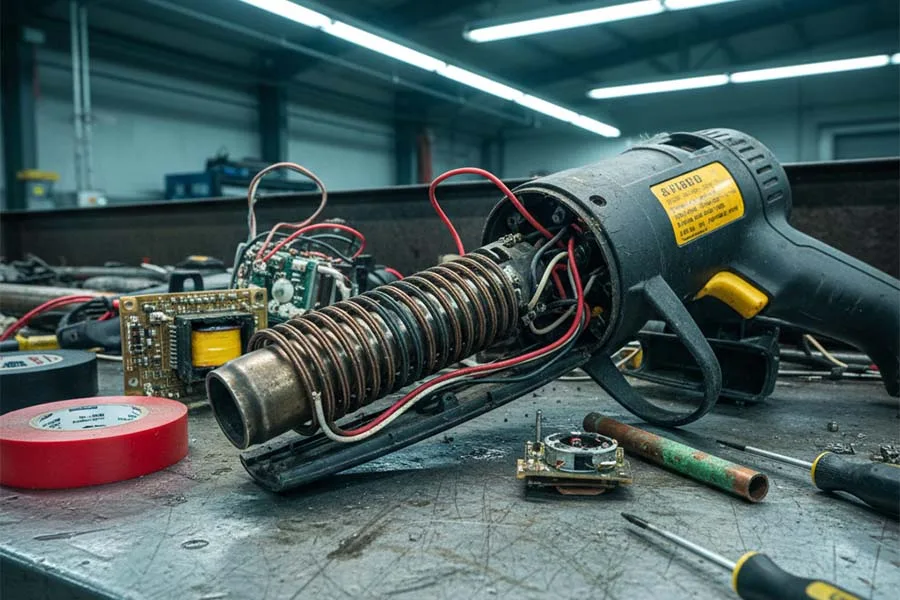
Step 3 – Inspect the Heating Element (Advanced Users Only)
If you’re comfortable opening the casing:
- Look for a broken coil
- Check for burned spots
- Look for disconnected terminals
A broken heating element usually means replacement is required.
Step 4 – Check the Thermal Fuse
Most heat guns have a thermal fuse near the heating element.
- If it’s blown, the heat gun will run cold
- Fuses are inexpensive and replaceable
- Never bypass a thermal fuse – it’s a safety device
Step 5 – Test the Switch and Temperature Selector
If the switch is worn or burned:
- The fan may run but the heating element won’t activate
- Replace the switch if you see discoloration or loose contacts
Step 6 – Inspect Internal Wiring
Look for:
- Loose connectors
- Melted insulation
- Burned wires
- Disconnected terminals
If wiring is damaged, professional repair is recommended.
Repair or Replace? When to Stop Troubleshooting
You should consider replacing the heat gun if:
- The heating element is burned out
- The internal wiring is melted
- The casing is cracked or warped
- The tool overheats repeatedly
- Replacement parts cost more than half the price of a new tool
Heat guns are affordable, and in many cases, replacement is more cost‑effective than repair.
Common Mistakes to Avoid
- Running the heat gun with blocked vents
- Using it at maximum temperature for long periods
- Holding it too close to surfaces
- Ignoring early signs of overheating
- Using cheap extension cords
- Opening the tool while it’s still hot
Avoiding these mistakes extends the life of your heat gun significantly.
How to Troubleshoot a Heat Gun FAQ
Further Read
Conclusion
A heat gun that stops heating is frustrating – but in most cases, the cause is simple and easy to diagnose. By checking airflow, power, the heating element, and safety components, you can quickly identify the issue and decide whether to repair or replace the tool.