
Why Measuring Accuracy Matters (More Than Most People Think)
Accurate measurement is the foundation of quality workmanship. Whether you’re cutting steel, installing cabinetry, machining parts, or planning construction layouts, one small measurement error can snowball into wasted materials, poor fit, safety risks, and lost time.
Here’s the uncomfortable truth:
👉 Most measurement mistakes don’t come from bad tools – but from misunderstanding accuracy.
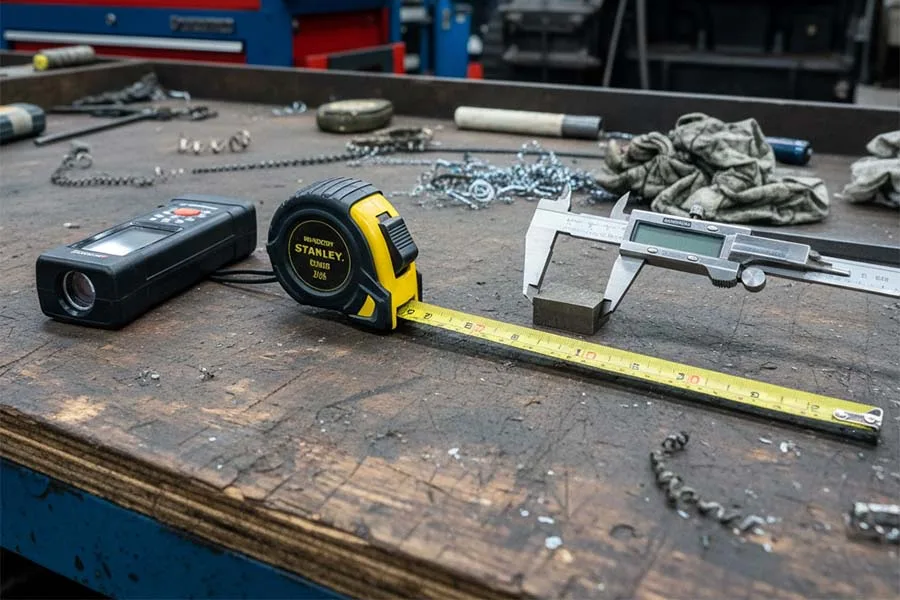
Laser measures, tape measures, and calipers all measure differently, report accuracy differently, and fail differently. Learning how to read, interpret, and trust each tool correctly is a skill that separates professionals from frustrated DIYers.
Let’s fix that – step by step.
Step 1: Understand What “Accuracy” Actually Means
Before comparing tools, you need one critical concept clear:
Accuracy vs Precision (They Are Not the Same)
- Accuracy = How close a measurement is to the true value
- Precision = How consistent repeated measurements are
📌 A tool can be precise but inaccurate – and vice versa.
Example:
If a caliper always reads 0.2 mm too high, it’s precise but inaccurate.
Step 2: How to Read Laser Measure Accuracy
Laser distance meters are fast, convenient, and ideal for long distances – but only when used correctly.
How Accuracy Is Stated
Manufacturers usually list accuracy as:
±1.5 mm at 10 m (example)
This means:
- The reading can be 1.5 mm higher or lower than the actual distance
- Accuracy often decreases with distance, surface type, and lighting
How to Read Laser Measurements Correctly
- Always check reference point settings (front vs rear)
- Measure perpendicular to the surface
- Avoid reflective, transparent, or dark targets
- Take multiple readings and compare results
⚠️ Critical insight:
Laser accuracy depends more on how you use it than the device itself.
Step 3: How to Read Tape Measure Accuracy
Tape measures are simple, familiar, and surprisingly misunderstood.
Accuracy Class (EU Standard)
Look for:
- Class I – Highest accuracy (±1.1 mm at 2 m)
- Class II – Standard professional use
- Class III – Basic or DIY level
Key Tape Measure Accuracy Factors
- Hook movement (intentional play for inside/outside measurements)
- Tape stretch over time
- Temperature expansion
- Reading angle (parallax error)
How to Measure Accurately with a Tape
- Ensure the hook slides freely
- Pull tight – but don’t over-tension
- Read straight-on, not at an angle
- Use the same tape for the entire project
📌 Pro tip:
A worn tape measure can be off by 2–3 mm – enough to ruin precision work.
Step 4: How to Read Caliper Accuracy (Digital & Vernier)
Calipers are the champions of precision – but only when handled properly.
Typical Accuracy
- Digital calipers: ±0.02 mm
- Vernier calipers: ±0.05 mm
- Micrometer-level work? Calipers are not enough.
How to Read a Caliper Correctly
- Clean jaws and workpiece
- Zero the caliper before measuring
- Apply gentle, consistent pressure
- Measure multiple times
⚠️ Common trap:
Squeezing harder does not increase accuracy – it decreases it.
Quick Accuracy Comparison Table
| Tool | Best Use | Typical Accuracy |
|---|---|---|
| Laser Measure | Long distances | ±1–2 mm |
| Tape Measure | Construction & layout | ±1–3 mm |
| Calipers | Precision parts | ±0.02–0.05 mm |
Common Measurement Mistakes (And How to Avoid Them)
❌ Trusting one reading
✔️ Take multiple measurements
❌ Using the wrong tool for the job
✔️ Match tool accuracy to task tolerance
❌ Ignoring environmental conditions
✔️ Control temperature and lighting
❌ Mixing tools mid-project
✔️ Stick to one measurement system
Troubleshooting: When Measurements Don’t Match
Problem: Laser and tape show different values
👉 Check reference points and surface reflection
Problem: Caliper readings vary
👉 Clean jaws and re-zero
Problem: Parts don’t fit despite “correct” measurement
👉 Check tool accuracy class and wear
Problem: Repeated errors across cuts
👉 Calibrate or replace the measuring tool
Safety Warnings & Best Practices
- Never look directly into laser beams
- Store tape measures fully retracted
- Avoid dropping calipers – internal damage is invisible
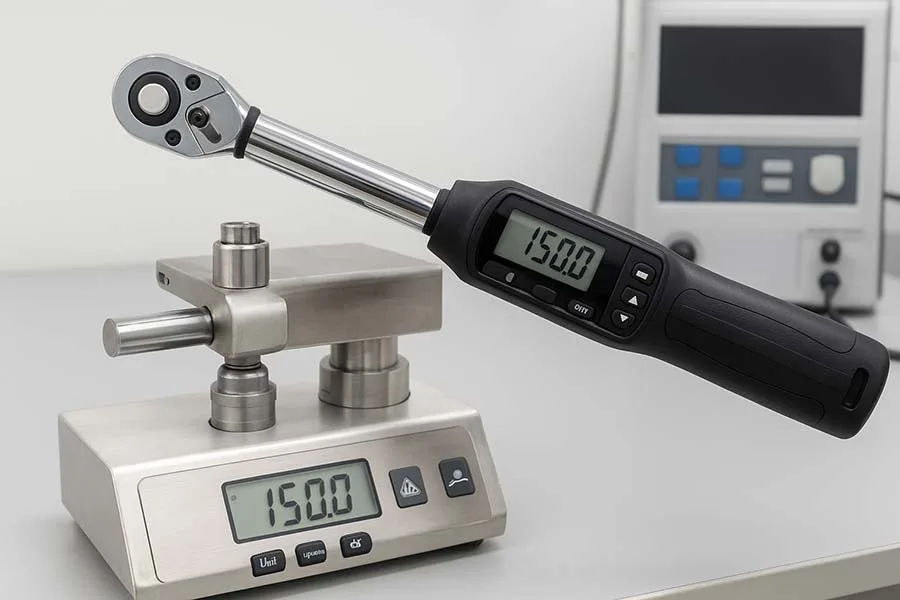
- Calibrate precision tools regularly
- Label worn or inaccurate tools clearly
Interesting Fact
Laser distance meters were originally developed for military surveying and artillery positioning, not construction.
Lesser-Known Fact
Most tape measures are most accurate at the first 10–20 cm – accuracy decreases as the tape extends.
How to Read Measuring Tool Accuracy FAQ
Further Read
- Bosch GLM50C Laser Measure Review
- Tacklife HD60 Laser Measure Review
- Laser Measurement Tools in Aircraft Manufacturing
- Best Laser Measuring Tools Under $100
- Franklin Sensors ProSensor T13 Review
- Leica DISTO D2 Review
Conclusion: Measure Smarter, Work Better
Understanding how to read measuring tool accuracy isn’t optional – it’s a professional skill. When you choose the right tool, read it correctly, and understand its limits, your work becomes faster, cleaner, and more reliable.
Now it’s your turn:
- Try these techniques in your next project
- Share your results or questions in the comments
- Send this guide to anyone who’s “pretty sure” their measurements are right 😄
Accurate work starts with accurate thinking.