
Choosing the right drill isn’t just about power – it’s about matching the tool to the material, the task, and the working conditions. Whether you’re a DIY beginner or a professional contractor, the right drill can dramatically improve speed, accuracy, and safety.
This guide breaks down the three main types of drills – corded, cordless, and impact – and helps you decide which one is best for your project.
1. Understanding the Three Main Drill Types
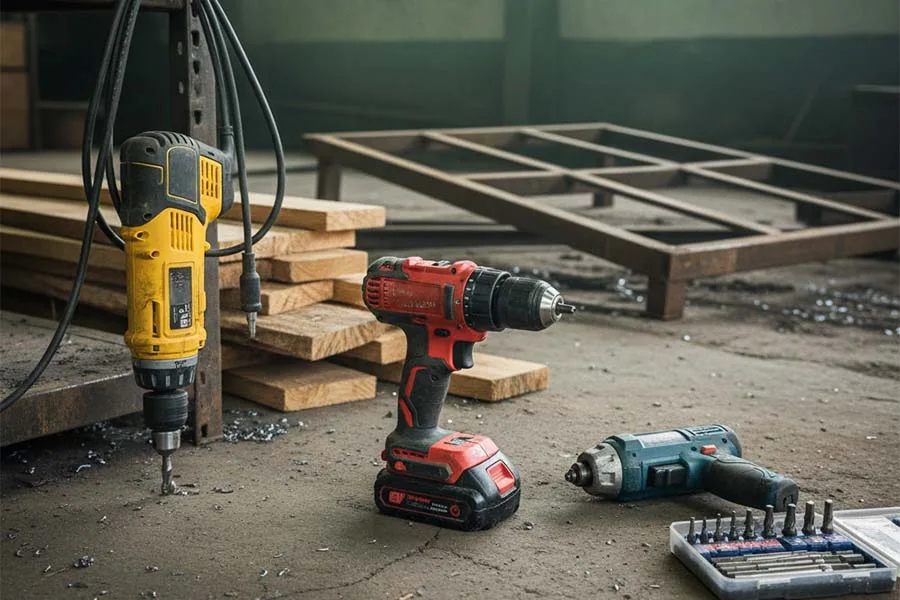
Corded Drills
Corded drills plug into a power outlet and deliver consistent, uninterrupted power.
Best for:
- Long drilling sessions
- Dense materials (metal, hardwood)
- Workshop environments
- High‑torque applications
Advantages:
- Unlimited runtime
- Higher torque
- Lighter weight (no battery)
- Often more affordable
Limitations:
- Requires power outlet
- Limited mobility
- Cable management needed
Cordless Drills
Cordless drills run on rechargeable batteries and are the most versatile option for everyday use.
Best for:
- Home projects
- Assembly work
- Drilling in tight or remote spaces
- General repairs
Advantages:
- Maximum mobility
- Easy to use anywhere
- Modern batteries deliver strong performance
- Wide range of models and voltages
Limitations:
- Limited runtime
- Batteries add weight
- High‑performance models can be expensive
Impact Drills (Impact Drivers)
Impact drills deliver rotational force combined with rapid impacts, making them ideal for driving screws and bolts.
Best for:
- Driving long screws
- Working with dense materials
- Construction and assembly
- Automotive work
Advantages:
- Extremely high torque
- Prevents cam‑out
- Compact and lightweight
- Fast and efficient for repetitive tasks
Limitations:
- Not ideal for precision drilling
- Requires impact‑rated bits
- Louder than standard drills
2. Key Factors to Consider Before Choosing a Drill
A. Power & Torque
- Corded: measured in amps
- Cordless: measured in volts (12V, 18V, 20V)
- Impact: torque measured in Nm or in‑lbs
Higher power = better performance in dense materials.
B. Speed Settings
Look for drills with variable speed and multiple gear settings.
- Low speed = high torque (driving screws)
- High speed = drilling clean holes
C. Chuck Size
Common sizes:
- 10 mm (3/8″) — light to medium tasks
- 13 mm (1/2″) — heavy‑duty drilling
Impact drivers use hex chucks for quick bit changes.
D. Battery Type (Cordless Only)
Choose lithium‑ion batteries for:
- Longer life
- Faster charging
- Better performance in cold conditions
Also consider:
- Battery capacity (Ah)
- Whether you need a second battery
E. Weight & Ergonomics
A drill should feel balanced and comfortable. For long sessions, weight matters more than power.
F. Additional Features
- LED work light
- Brushless motor
- Belt clip
- Clutch settings
- Hammer function (for masonry)
These features improve usability and extend tool life.
3. Common Mistakes to Avoid
- Buying too much power for simple home tasks
- Choosing the wrong chuck size for your bits
- Ignoring battery compatibility across brands
- Using a drill instead of an impact driver for long screws
- Skipping safety gear (gloves, goggles, dust mask)
- Not considering weight for overhead work
Avoiding these mistakes saves time, money, and frustration.
4. Top Picks by Use Case
Best for Homeowners:
Cordless 18V Drill/Driver Balanced, versatile, and perfect for everyday tasks.
Best for Heavy‑Duty Work:
Corded 13 mm Drill Unlimited power for drilling metal, hardwood, and thick materials.
Best for Construction & Assembly:
Impact Driver (18V or 20V) Fast, powerful, and ideal for driving long screws and bolts.
Best for Masonry:
Hammer Drill (Corded or Cordless) Designed for drilling into concrete and brick.
How to Choose the Right Drill for Your Project FAQ
6. Interesting Facts About Drills
- The first electric drill was invented in 1889 by two Australian electricians.
- Brushless motors can increase efficiency by up to 30%.
- Impact drivers deliver over 3,000 impacts per minute.
- Lithium‑ion batteries retain power even when not used for months.
Conclusion: Choose the Drill That Matches Your Project – Not Just the Price
The right drill depends on what you’re building, where you’re working, and how often you use the tool. Corded drills offer raw power, cordless drills offer flexibility, and impact drivers deliver unmatched torque for driving tasks.
If you choose based on task, not marketing, you’ll get better results, safer operation, and a tool that lasts for years.
Further Read
- Best Cordless Power Drills Under $100
- Skil HD182002 Review: Affordable Hammer Drill That Hits Harder Than Expected
- Best Cordless Hammer Drills Under $100
- TXS 18 Basic Cordless Drill-Driver Review
- Best Impact Driver Buying Guide | Top Picks, Features & Buying Tips
- Makita FD07R1 Review
- Bosch GBH2-28L SDS-Plus Rotary Hammer Review
- Hilti TE 60-ATC-AVR Review: Heavy-Duty Hammering with Smart Safety Built In